
I know this isn’t exactly a hot take, but I’ve been thinking a lot recently about the role of a software developer in a world full of AI coding tools like Claude Code, the Ralph Wiggum loop and Gastown.
Like a lot of developers, myself included, I think there’s been a quiet journey through the five stages of grief over the past year or so. Denial that any of this would really work. Anger about what it might mean for the craft. Bargaining about how “real engineers” would always be needed. A brief dip into pessimism about the future of the career altogether.
I think I’m finally landing somewhere close to acceptance and to be honest I'm quite excited about the future.
No one gets into software development because they enjoy typing, memorising syntax or grinding LeetCode questions for fun. Those things might be part of the process, but they’re not the point. The thing most developers are actually motivated by is solving problems. Taking something vague, messy, or inefficient and turning it into something that works better than it did before.
AI just changes where the effort is applied.
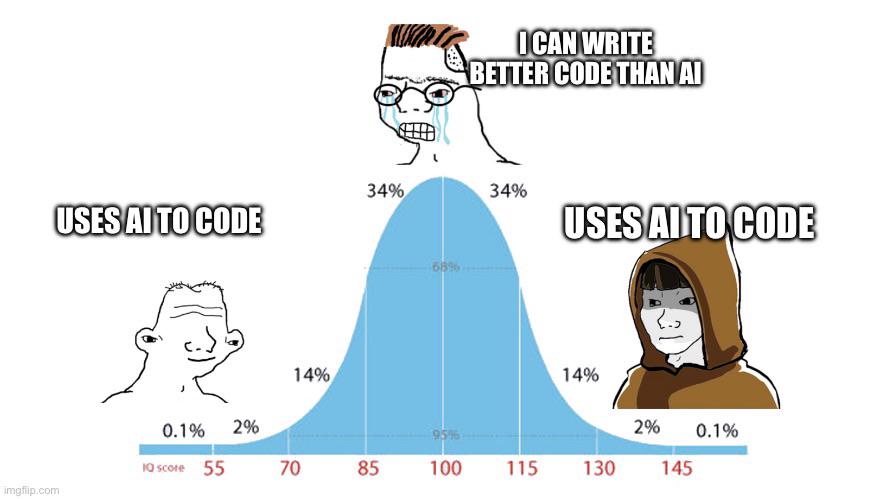
If large chunks of syntax and boilerplate become cheaper and faster to produce, that doesn’t remove the need for developers. It just shifts the value. Less time spent translating ideas into code line by line, more time spent understanding what the problem actually is, what constraints matter, and what a good solution looks like in the real world.
I suspect the next generation of strong developers will be less defined by their ability to recall APIs from memory, and more by their ability to communicate clearly, work with non-technical stakeholders, and build a solid understanding of the domain they’re operating in. Knowing why you’re building something will matter more than knowing the exact incantation to make it compile.
In a way, this is similar to how we’ve been working at Vorboss for a while. We don’t put software development on a pedestal purely for the sake of the craft. We use whatever tools make sense for the problem at hand. Sometimes that’s TypeScript. Sometimes it’s a spreadsheet. Sometimes it’s low-code tooling or something that barely looks like “engineering” at all.
The goal isn’t elegant code for its own sake. The goal is to make people’s lives easier, reduce friction, and help the business move forward. Code is just one of many tools available to do that.
AI fits quite naturally into that mindset. It’s another lever to pull, another way to reduce the distance between an idea and a working solution. Used well, it doesn’t replace judgement or experience, it amplifies them.
So while it’s understandable that a lot of developers are uneasy about where this is heading, I’m increasingly optimistic. The parts of the job that actually matter, problem-solving, systems thinking, communication, and judgement aren’t going away.
If anything, they’re becoming more important.